Celtic tattoos, with the meaning behind every knot
Original concept designs with the exact prompt behind each one, plus honest history for every Celtic symbol.
Showing 48 of 1,000 designs
Skip the galleryNo designs match these filters yet. Try another symbol or style.
Ten symbols and what they mean
Each page separates documented history from modern readings, so you know what you are wearing.
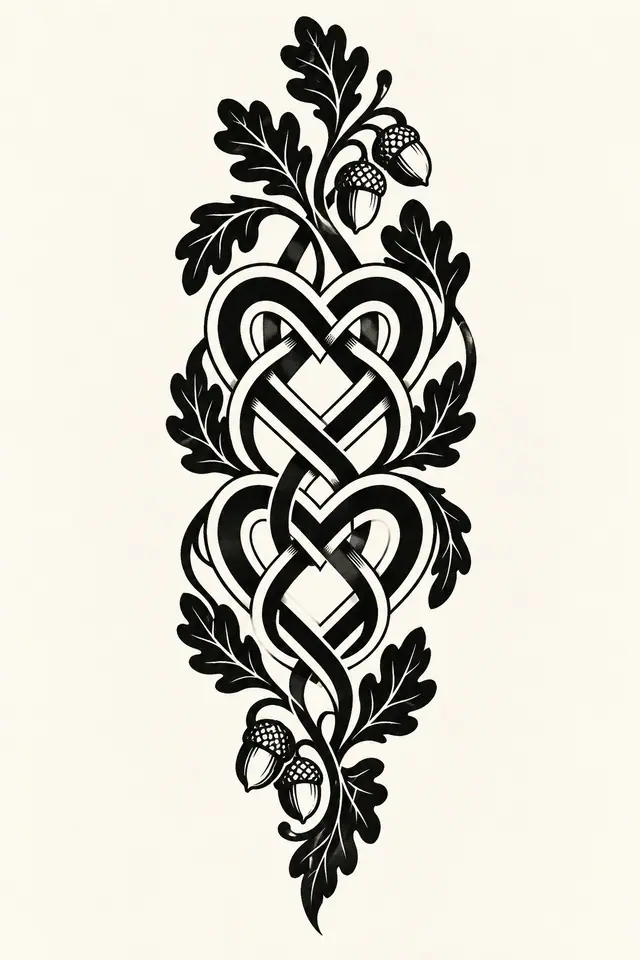
Celtic knot
Unbroken interlace, read today as eternity and connection.
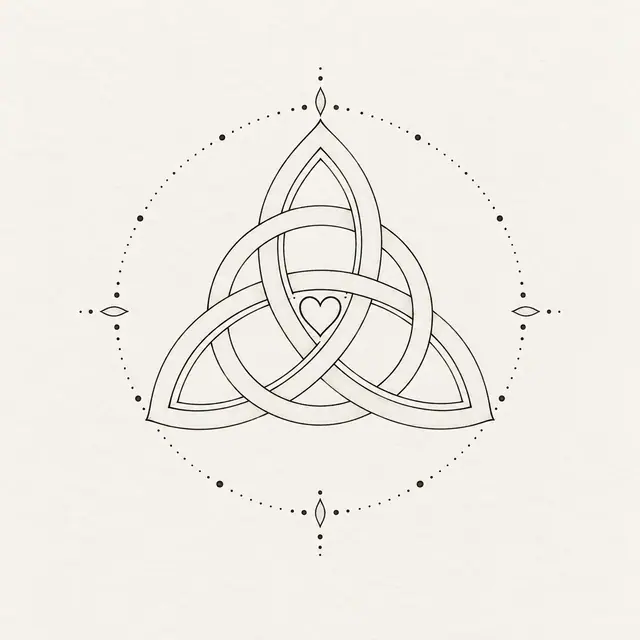
Trinity knot
Three interlocked arcs, best known as the Holy Trinity.
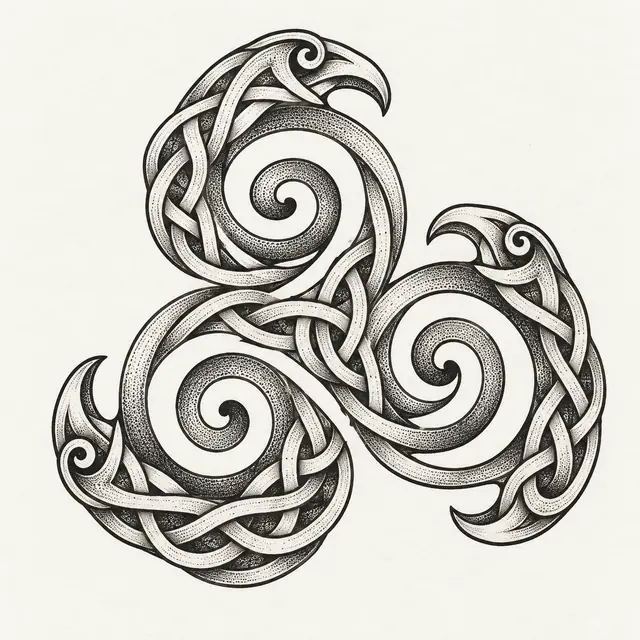
Triskele
A triple spiral that is older than the Celts themselves.
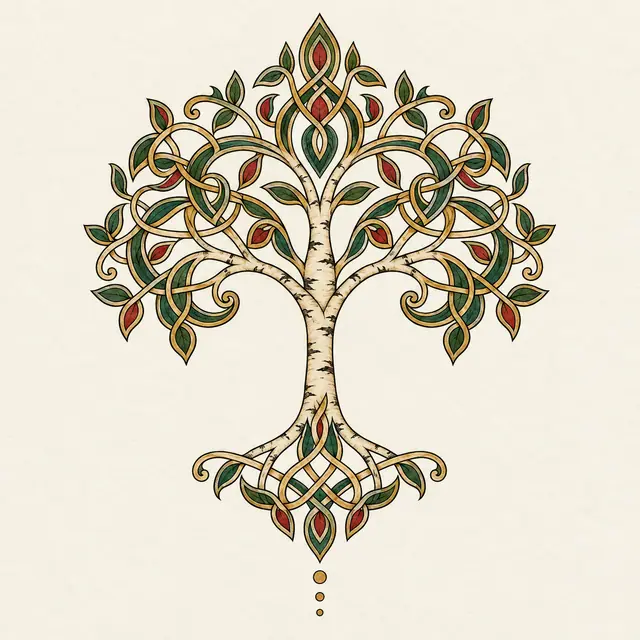
Tree of life
Roots that mirror branches: growth, family and balance.
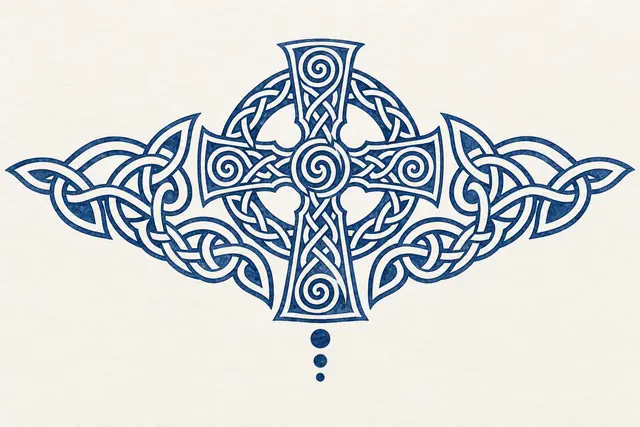
Celtic cross
The ringed stone cross of early medieval Ireland.
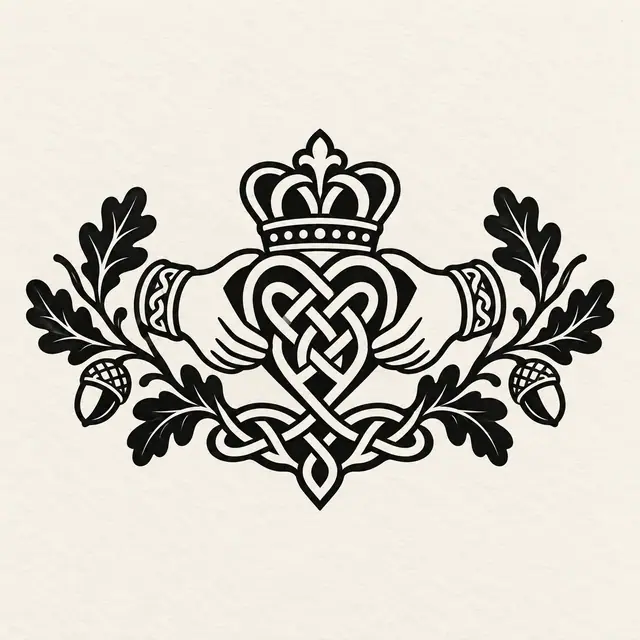
Claddagh
Hands, heart and crown from 17th-century Galway.
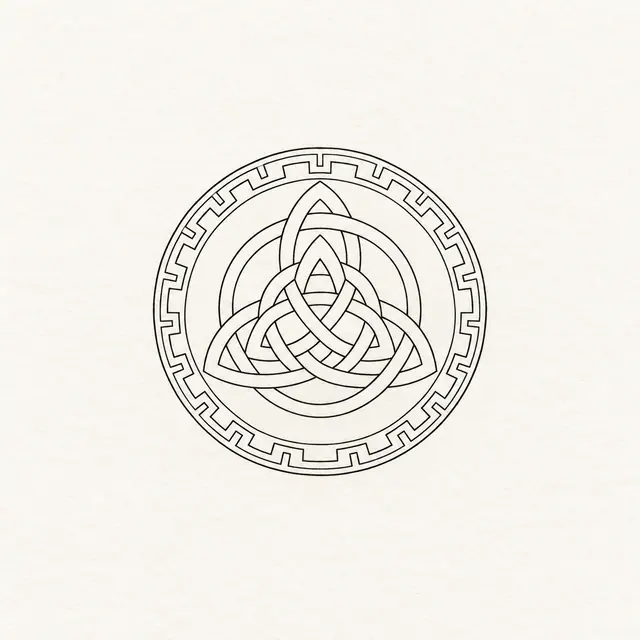
Shield knot
A four-cornered knot worn for protection.
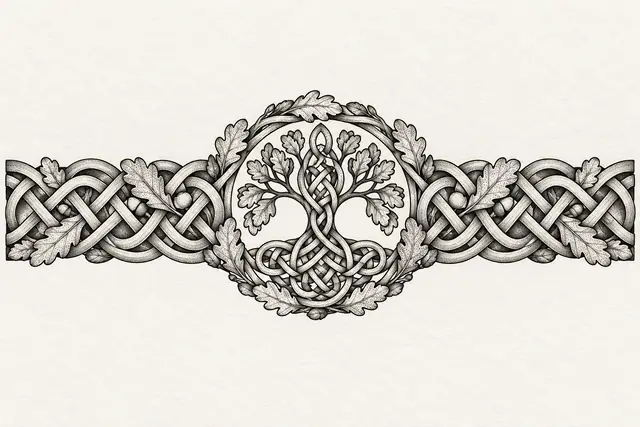
Dara knot
A modern knot inspired by the roots of the oak.
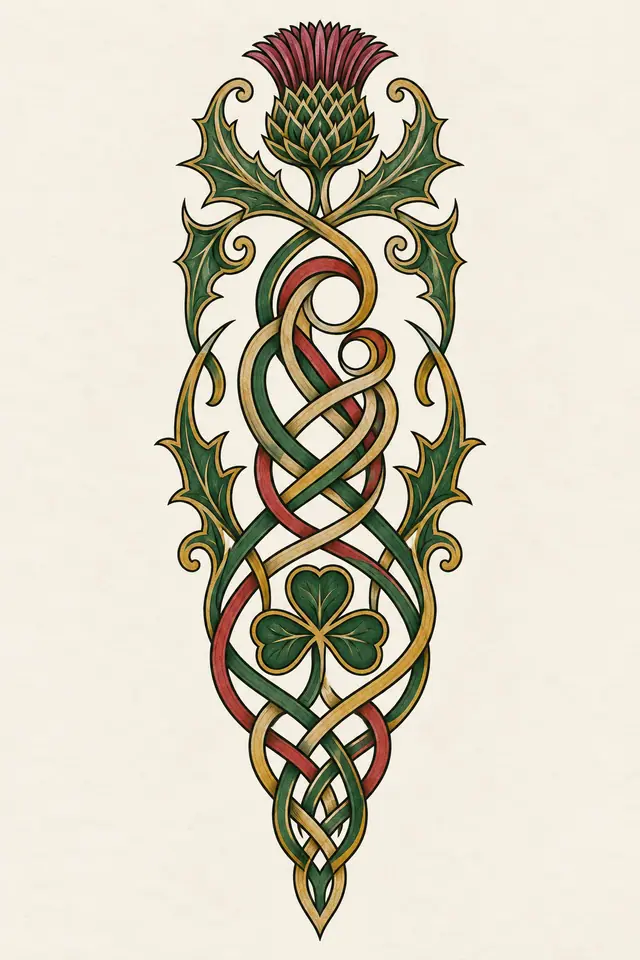
Motherhood knot
A modern knot of two hearts, for parent and child.
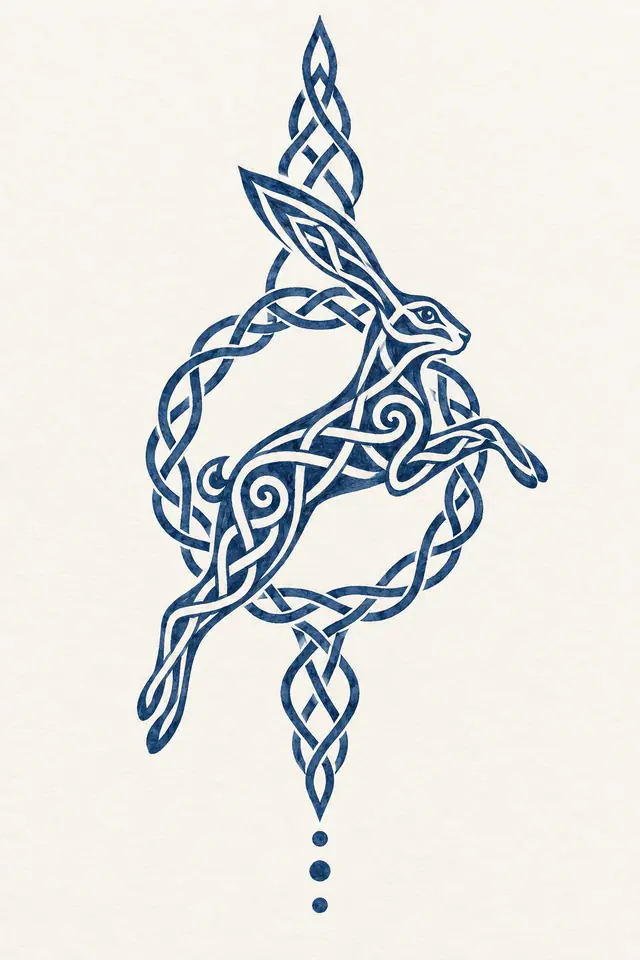
Celtic animals
Wolves, stags, ravens and salmon woven into interlace.
Start from where it will live
Knotwork behaves differently on a wrist than across a back. Pick a placement to see designs drawn for it.
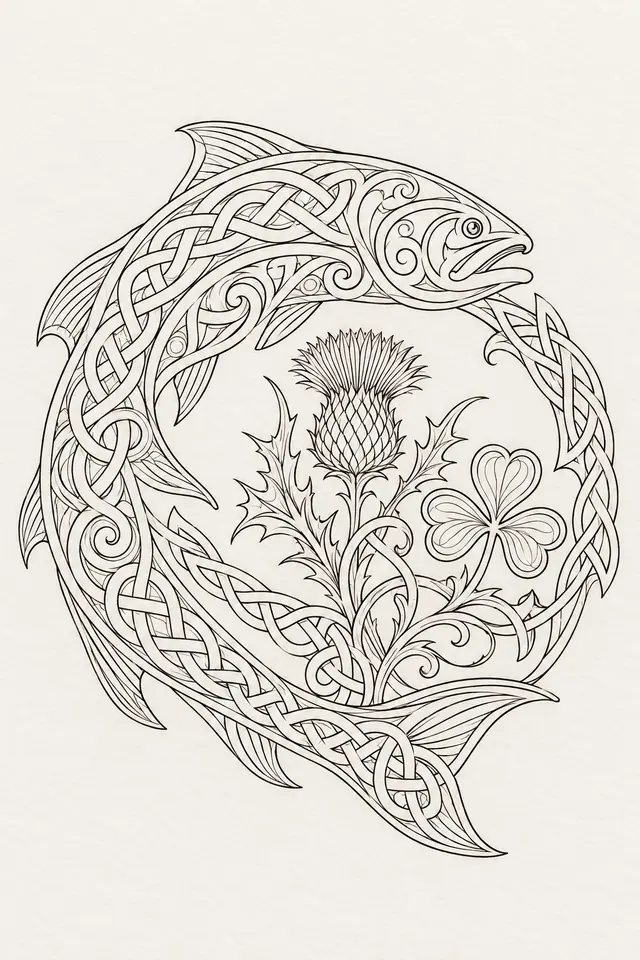
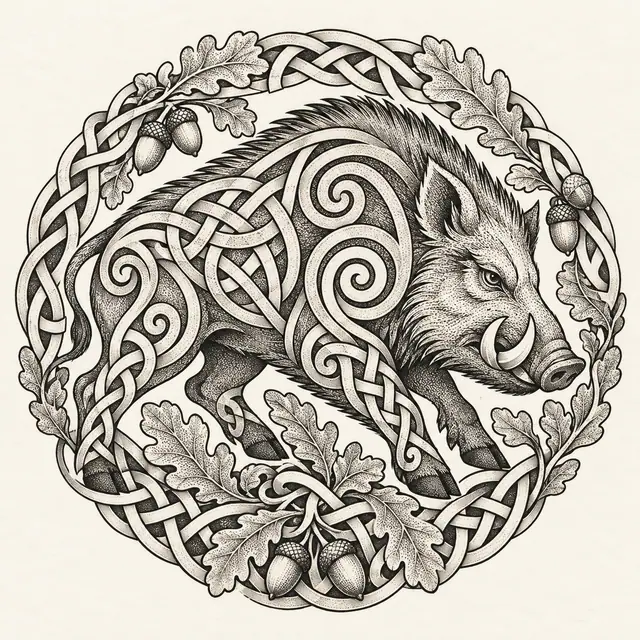
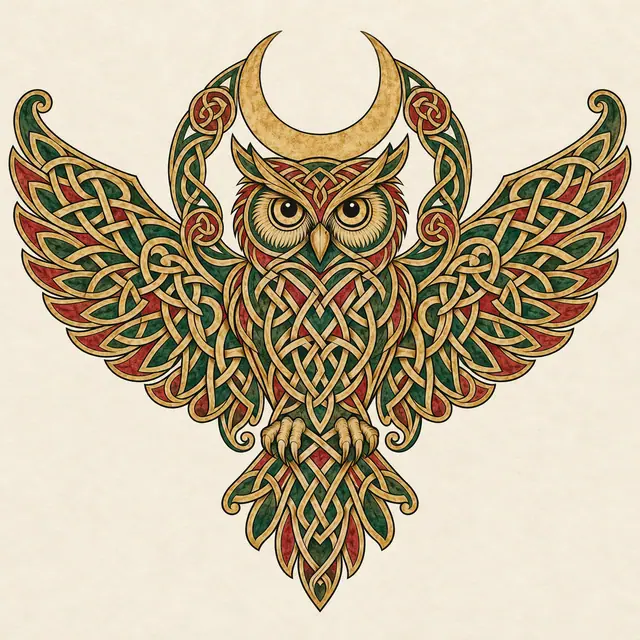
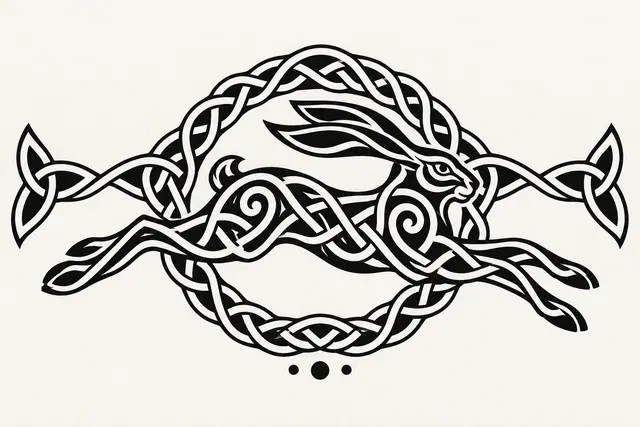
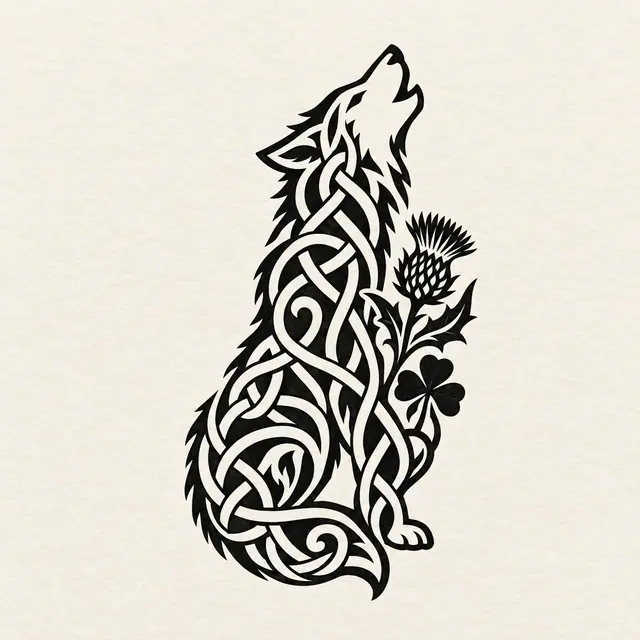
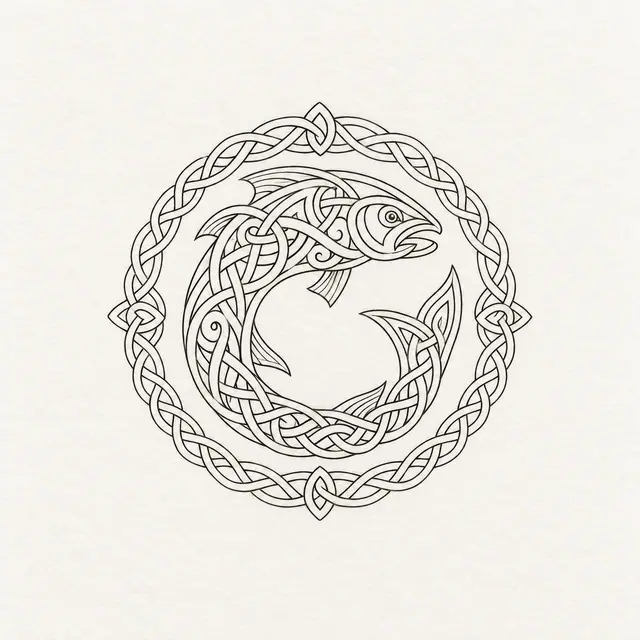
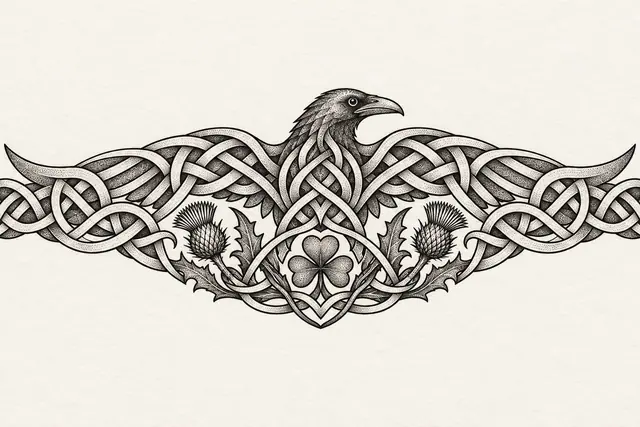
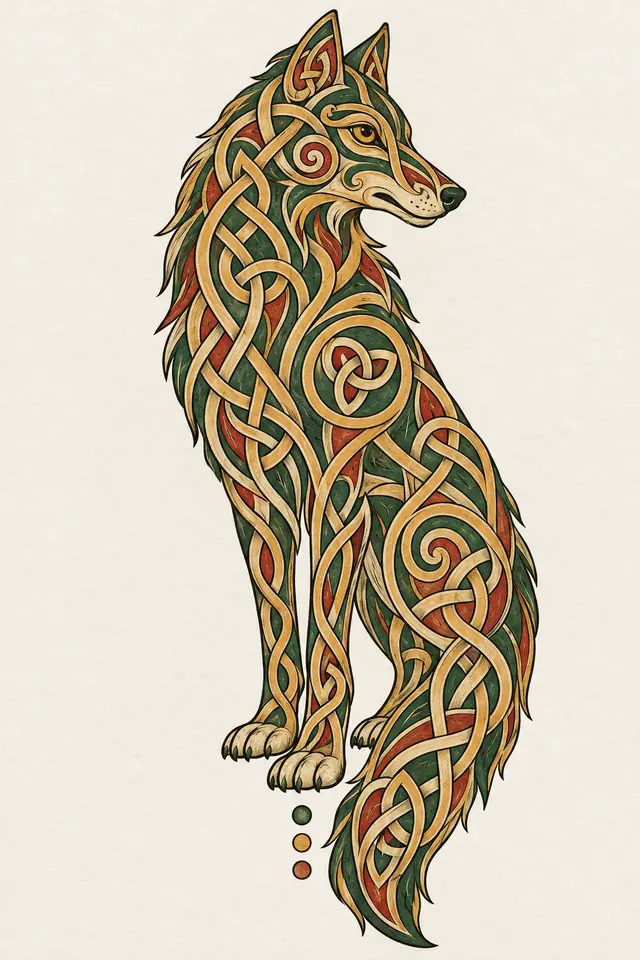
Every design comes with its prompt
Open any design and you will see the exact ChatGPT prompt that drew it. Copy it, swap the symbol or the style, and bring the result to your artist as a starting brief.
These are concept designs. A good artist will redraw the knotwork to fit your body.
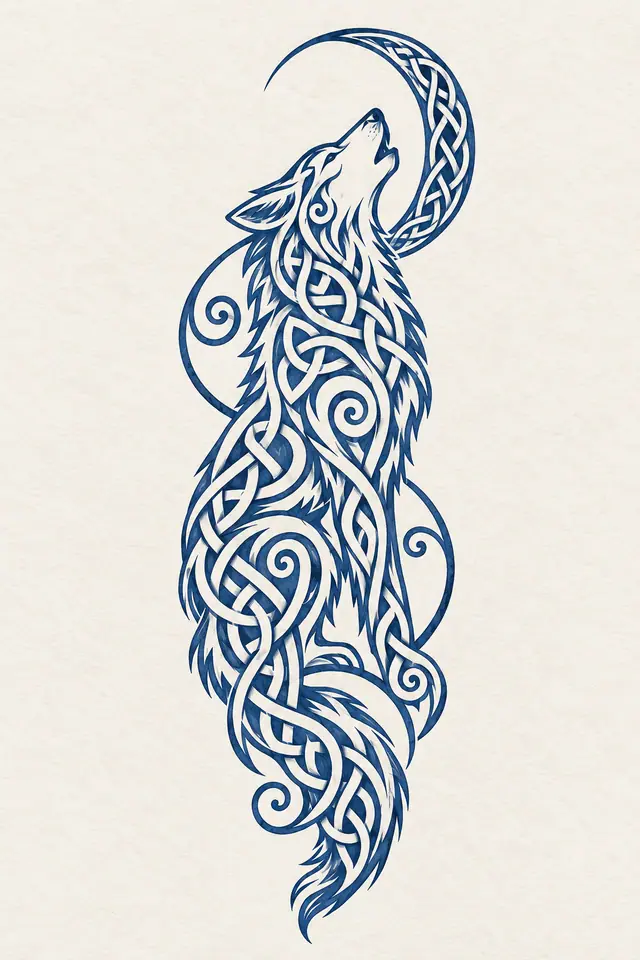
Celtic tattoo design: a Celtic wolf with knotwork woven through its body, with a crescent moon, composed to fit the inner forearm, tall and narrow. Woad blue: single-color indigo-blue ink, like ancient woad body paint, with clean outlines. Accurate continuous over-under interlace with no broken or loose strands. Original design, not a copy of an existing tattoo. No text, no lettering, no watermark, no signature. Presented as a clean tattoo flash drawing on plain off-white paper, single design centered with generous margins, vertical 2:3 image.
A straight answer
There is no archaeological proof that the ancient Celts tattooed knotwork.
Most of what we call Celtic tattoo art comes from Christian-era manuscripts and stone crosses, revived from the 1800s onward. Knowing that makes for a better tattoo, not a lesser one.
Read the historyThe guide
Celtic tattoos: a complete guide
What Celtic tattoos mean, where the style comes from, and how to choose a design that fits you, your body and your story.
What Celtic tattoos are
Celtic tattoos are designs built from the art of early medieval Ireland, Scotland and Britain: endless knotwork, triple spirals, interlaced animals, high crosses and later symbols such as the Claddagh. The style is recognisable at a glance. Lines weave over and under each other without a break, and that unbroken path is why most Celtic designs are read today as eternity, loyalty and connection.
This site brings together 1,000 original Celtic tattoo designs and the history behind each symbol. You can browse all designs, start from a symbol, or read the guides before you book with an artist.
Traditional and ancient Celtic tattoos
When people search for traditional Celtic tattoos or ancient Celtic tattoos, they usually picture knotwork. The honest history is more interesting. Roman writers describe Britons colouring their skin with woad, but no tattooed Celtic body has ever been found, so nobody knows what those marks looked like.
The knotwork style itself comes from Christian-era art made centuries later: the Book of Kells, the Lindisfarne Gospels and the carved stone crosses of Ireland and Scotland. It was revived in the 19th and 20th centuries and became a tattoo staple in the late 20th century. A traditional Celtic tattoo today means a design faithful to that manuscript and stone tradition. Our guide to ancient Celtic tattoos covers what the evidence really says.
The meaning of Celtic tattoos
The meaning of a Celtic tattoo depends on the symbol you choose:
- Celtic knot: eternity and connection, because the line has no beginning and no end.
- Trinity knot (triquetra): the Holy Trinity in Christian art, and today any meaningful group of three, such as past, present and future.
- Triskele: a triple spiral far older than knotwork, read as motion, growth and cycles.
- Tree of life: roots and branches joined in one circle, for family, ancestry and growth.
- Claddagh: hands, heart and crown for friendship, love and loyalty.
- Shield knot: a four-cornered knot worn for protection.
- Dara knot: a modern knot named after the Irish word for oak, chosen for strength and endurance.
Many popular meanings are modern rather than ancient, and every symbol page tells you which is which. A meaning you choose for yourself is no less real for being new.
Celtic tattoos for men
Celtic tattoos for men tend to be larger and bolder: half sleeves, chest pieces, upper-back panels and armbands in heavy blackwork. Warrior Celtic tattoos often combine a shield knot or Celtic cross with animals such as the boar, the wolf or the stag. The boar appears in Iron Age Celtic art and on helmet crests, which makes it one of the few warrior symbols with real roots. See the Celtic tattoo designs for men and the sleeve designs.
Celtic tattoos for women
Celtic tattoos for women are often lighter: fine-line trinity knots, motherhood knots, ankle bands and small wrist pieces. Feminine Celtic tattoos use open knotwork, flowing curves, oak leaves, ivy and moons. But female Celtic tattoos do not have to be small or delicate, and many women choose full sleeves and back pieces.
For female strength Celtic tattoos, people often pick the Dara knot, the triskele or the shield knot. Warrior female strength Celtic tattoos sometimes add a hare, a horse or a raven. These strength meanings are modern readings, not ancient rules, so choose the symbol that speaks to you. The motherhood knot is a modern design made of two interlaced hearts, popular as a tribute to a mother or a child. For female Gaelic Celtic tattoos that include words, have the Irish or Scottish Gaelic checked by a native speaker before it is tattooed. Browse the Celtic tattoo designs for women.
Small and meaningful Celtic tattoos
Small Celtic tattoos work best with simple shapes. A trinity knot, a triskele, a small Claddagh or a single closed knot stays readable at wrist or ankle size. Dense interlace needs room, because lines spread as a tattoo ages. Keep detailed knots at about 6-8 cm (2.5-3 in) across or more.
Meaningful small Celtic tattoos are usually a single symbol chosen for one idea: a trinity knot for three people you love, a Claddagh for friendship, a Dara knot for strength. These are the most popular small Celtic tattoos for females, with meanings that are easy to explain. Start with the small designs or the wrist and ankle collections.
Irish and Scottish Celtic tattoos
Irish Celtic tattoos draw on the high crosses, the Book of Kells, the Claddagh from Galway and the Ogham alphabet carved on early Irish stones. Scottish Celtic tattoos draw on Pictish symbol stones and their animals, the crosses of Iona, and the thistle, which became Scotland’s national emblem much later. The knotwork is shared, so the difference is mostly in the symbols you pair with it. Irish and Scottish Gaelic are different languages, so never use one in place of the other in a tattoo.
Tribal Celtic tattoos and other styles
Tribal Celtic tattoos mix heavy black tribal shapes with knotwork, a style that peaked in the 1990s. Today the same boldness usually comes from clean blackwork. You can also choose fine line for delicate work, dotwork for soft shading, colour illuminated in the manner of old manuscripts, or woad blue for a nod to the ancient Britons. Compare them in the blackwork, fine line and dotwork galleries.
Celtic tattoos to avoid
There are a few Celtic tattoos to avoid: knotwork with broken or doubled crossings, knots too small to last, invented “ancient” meanings, unchecked Gaelic or Ogham, Norse symbols sold as Celtic, and the plain square-armed cross in a circle that white supremacists use. Our guide to Celtic tattoos to avoid shows each mistake and what to get instead.
How to use the designs on this site
Every design in the gallery comes with the exact prompt that created it. Open a design, read the prompt, and copy it with one click. Change the symbol, the style or the placement, and you have a new concept to take to your artist. Each design is filed by symbol, placement and style, so you can go from “Celtic tattoo for the forearm” to a page of options in two clicks.
Want a name in your design? The free Ogham name converter writes any name in the early Irish Ogham alphabet and gives you a clean SVG file for your artist.
All designs here are concepts, not stencils. A professional tattoo artist should redraw any design so the knotwork is correct and fits your body. Before you book, read about placement and cost, pain and aftercare.
Write a name in Ogham
The early Irish alphabet of strokes along a line. Type a name and download a stencil-ready SVG for your artist.
Open the converterQuestions about Celtic tattoos
What do Celtic tattoos mean?
It depends on the symbol. Unbroken knotwork is usually read as eternity and connection, the trinity knot as the Holy Trinity or any meaningful group of three, the tree of life as growth and family, and the Claddagh as love, friendship and loyalty. Many popular meanings are modern, which doesn't make them any less personal.
What are the best Celtic tattoos for men?
Men often choose larger, bolder pieces: Celtic knot armbands, half sleeves, chest panels and Celtic crosses in heavy blackwork. Warrior Celtic tattoos usually pair a shield knot or cross with a boar, wolf or stag. The boar is one of the few warrior symbols that really appears in ancient Celtic art.
What are good Celtic tattoos for women?
Popular Celtic tattoos for women include fine-line trinity knots, motherhood knots, Claddaghs, ankle bands and trees of life. Feminine designs use open knotwork, curves, oak leaves, ivy and moons, but female Celtic tattoos can just as well be bold sleeves or back pieces.
Which Celtic symbol means strength for a woman?
For female strength Celtic tattoos, people usually choose the Dara knot (named after the Irish word for oak), the triskele or the shield knot, sometimes with a hare, horse or raven for a warrior feel. These strength meanings are modern readings rather than ancient rules, so pick the symbol that feels right to you.
What are meaningful small Celtic tattoos?
A trinity knot for three people you love, a Claddagh for friendship and loyalty, a triskele for growth, or a Dara knot for strength. Small Celtic tattoos for females and males work best as one simple symbol, about 2.5 cm (1 in) or more across. Detailed knots need about 6-8 cm (2.5-3 in) so the lines stay clear as the tattoo ages.
Did the ancient Celts have tattoos?
Roman writers describe Britons coloring their skin with woad and marking their bodies with animal designs, but no tattooed Celtic remains have been found, so nobody knows for sure. The knotwork style came later, from early medieval Irish and British art.
What is the difference between Irish and Scottish Celtic tattoos?
The knotwork is shared. Irish Celtic tattoos often add the Claddagh, high crosses, the Book of Kells style or Ogham letters, while Scottish Celtic tattoos draw on Pictish stones and animals, Iona crosses and the thistle. Irish and Scottish Gaelic are different languages, so never swap one for the other in lettering.
Are tribal Celtic tattoos still in style?
Tribal Celtic tattoos, which mix heavy tribal shapes with knotwork, were most popular in the 1990s. Today most people get the same bold look with clean blackwork knotwork, which ages better and keeps the over-under weave readable.
Which Celtic tattoos should I avoid?
Avoid knotwork with broken crossings, knots too small to last, invented ancient meanings, unchecked Gaelic or Ogham, Norse symbols sold as Celtic, and the plain square-armed cross in a circle used by white supremacists. Choose a traditional high-cross form instead.
Can I get a Celtic tattoo without Irish or Scottish heritage?
Yes. Celtic art has been shared and reworked for centuries. Respect means learning what your symbol actually is, skipping invented ancient meanings, and having any Irish or Scottish Gaelic text checked by a native speaker.
How small can a Celtic knot tattoo be?
Dense interlace needs room, because lines spread a little as a tattoo ages and tight gaps fill in. As a rule of thumb, keep detailed knots at about 6-8 cm (2.5-3 in) across. A simple single-line trinity knot can go down to about 2.5 cm (1 in).
How much does a Celtic tattoo cost?
Small pieces often cost close to a shop's minimum, while sleeves take several sessions. Prices vary widely by city and artist, and careful knotwork takes longer than it looks.