Celtic cross tattoos
A Celtic cross tattoo is a Christian cross with a ring around its center, modeled on the stone high crosses of Ireland and Britain from roughly the 8th to 10th centuries.
103 designs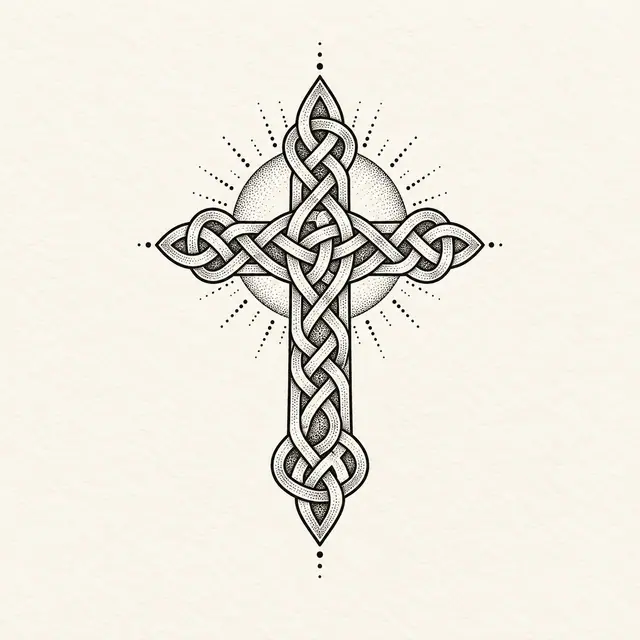
What a Celtic cross is
A Celtic cross is a Christian cross whose arms are joined by a ring around the point where they meet. On the old stone crosses, the arms usually extend past the ring, and the ends of the arms often flare slightly. The shaft is long and set on a wider base. The faces of the cross are carved with panels: knotwork, spirals, animal interlace and, on many Irish crosses, scenes from the Bible.
A good Celtic cross tattoo gets the proportions right before anything else. The ring should sit centered on the crossing, the side arms should match, and the shaft should be noticeably longer than the top arm. Then look at the panels. Each panel of knotwork is a small knot of its own and needs the same clean over-under weave and open gaps as any Celtic knot. Panels crammed with too many crossings are the most common problem in cross flash.
Where it actually comes from
Ringed stone crosses, often called high crosses, were carved in Ireland and Britain from roughly the 8th to the 10th centuries. They stood at monasteries and church sites. Some of the best-preserved examples are in Ireland: Muiredach’s High Cross at Monasterboice, County Louth, dates to the 10th century and stands over 5 meters tall, its surfaces covered in carved biblical scenes. Ringed crosses also appear on Pictish cross-slabs in Scotland and on stones in Wales, Cornwall and the Isle of Man.
The ring’s origin is debated. Some scholars point to structure, since a ring supports the stone arms. Others see a link to the wreath that surrounded the Chi-Rho in earlier Christian art, a symbol of Christ’s victory. Others suggest a sun or cosmic symbol carried over from older belief. The honest answer is that we don’t know, and you should be wary of any source that states one theory as fact.
The ringed cross had a big revival in the 19th century, when the Celtic Revival made it a popular grave marker and an emblem of Irish and Scottish identity. Most modern Celtic cross tattoos, jewelry and souvenirs grow out of that revival, filtered through later design books like George Bain’s Celtic Art: The Methods of Construction (1951).
What it is commonly taken to mean
| Element or reading | Status |
|---|---|
| Christian faith | Historically attested; these are church monuments |
| Irish, Scottish or Welsh heritage | Strong since the 19th-century Celtic Revival |
| Ring as eternity or God’s endless love | Popular modern reading |
| Ring as the sun, or joining of pagan and Christian belief | Debated theory, often stated too confidently |
| Memorial for someone who has died | Common modern use, echoing grave markers |
A word of care: a simplified version, a plain equal-armed cross inside a circle, has been adopted by white supremacist groups, and the Anti-Defamation League lists it as a hate symbol. The traditional high cross, with its long shaft and Insular decoration, is not that. Still, if your design is very minimal, add a longer shaft, knotwork or a carved-stone texture so it reads clearly as the heritage symbol. Our guide to Celtic tattoos to avoid covers this in more detail.
Design choices
Blackwork crosses with solid outlines and open knotwork panels are bold and age well. Good for forearms and the upper back.
Carved-stone dotwork recreates the weathered look of a real high cross, with stippled shading in the recessed areas.
Fine-line suits a slim, simple cross outline. Skip knotwork panels at fine-line weight unless the cross is large.
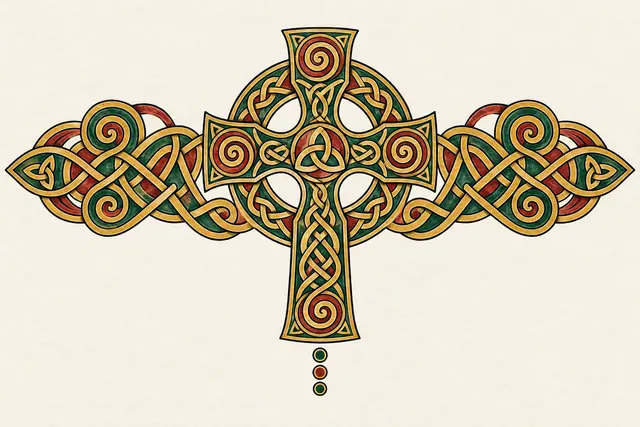
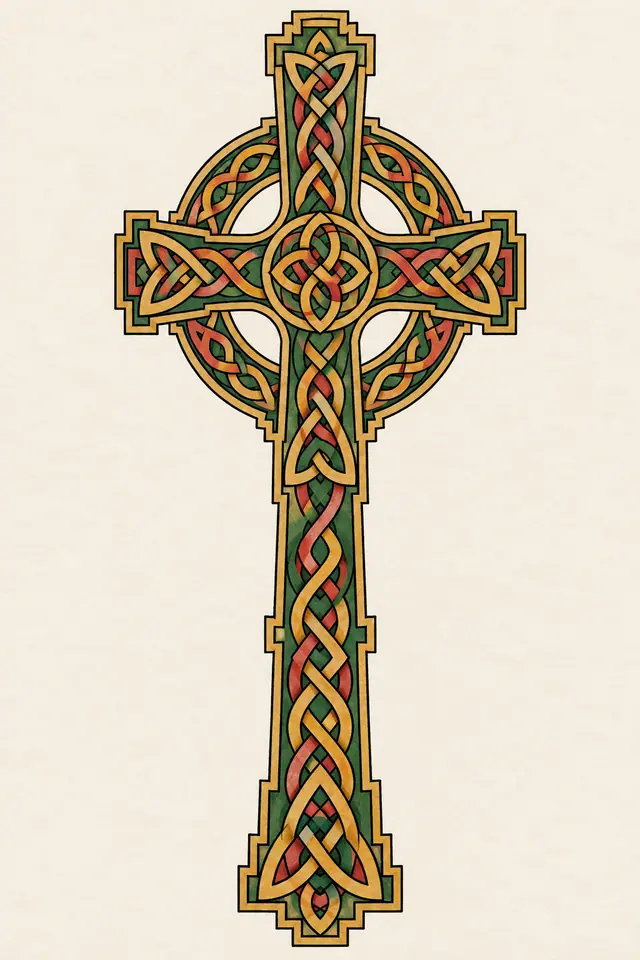
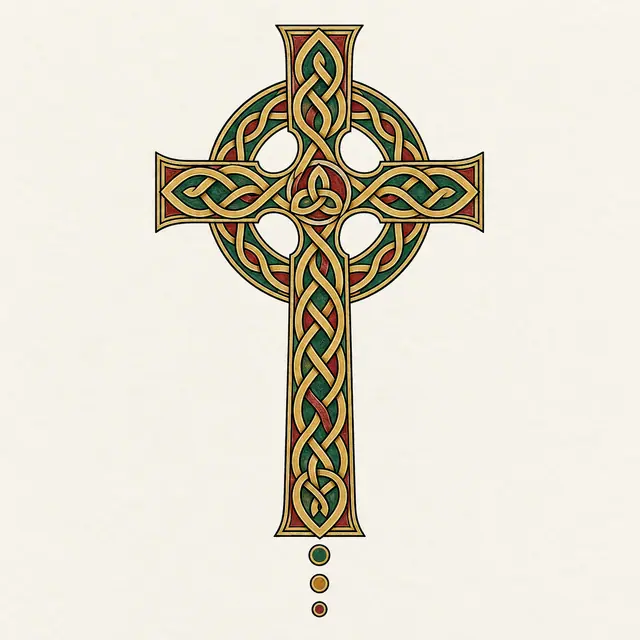
Illuminated-manuscript color fills panels with red, yellow, green and blue, a style closer to the Book of Kells than to stone, but popular and striking.
Woad-blue single-color crosses read as a heritage piece with a softer look than solid black.
Placement and size
The cross is a vertical shape, so it suits long placements.
- Upper back or between the shoulder blades: 5-8 inches, room for full panels.
- Forearm: 4-6 inches along the length of the arm, a classic placement. See our forearm designs.
- Calf: the long muscle suits a tall cross well.
- Chest: a cross over the heart or centered on the sternum, usually 3-5 inches.
- Small and simple: a 2-inch outline cross on the wrist or behind the ear, with no panel detail.
Remember the cross has a clear top and bottom, so it should be straight relative to how you stand. Have your artist place the stencil while you’re upright and relaxed.
Knotwork panels inside the arms should be planned as separate small knots, each with only a few crossings, rather than one long knot squeezed into the shape. That keeps the cross readable from a distance and gives each panel room to age.
Pairing it with other symbols
Crosses pair well with a trinity knot set in the center of the ring, a common way to reinforce the Christian reading. A Claddagh beneath the cross can mark Irish family ties. Memorial crosses often carry a name or dates on the base, and Ogham lettering running down the shaft echoes early Irish inscribed stones. Keep added elements outside the panels so the cross itself stays readable.
Celtic cross tattoo designs
Questions people ask
What does a Celtic cross tattoo mean?
For most people it is a sign of Christian faith combined with Irish, Scottish or Welsh heritage. Some also read the ring as eternity or as a sun symbol. Those ring meanings are modern interpretations; nobody knows for sure why the ring was added.
Why does the Celtic cross have a circle?
Historians still debate it. Suggestions include a structural support for the stone arms, a victory wreath borrowed from earlier Christian art, or a cosmic or sun symbol. None of these is proven, and more than one may be true.
Is the Celtic cross a hate symbol?
The traditional ringed cross is a Christian and heritage symbol worn by millions. A stripped-down version, a plain square cross inside a circle, is used by some white supremacist groups. Choose a design with clear Insular detail so your meaning is never in doubt.
How big should a Celtic cross tattoo be?
A simple outline cross can work at 2-3 inches tall. If you want knotwork panels in the arms and shaft, plan on 4-6 inches or more so the interlace stays readable.
Related symbols
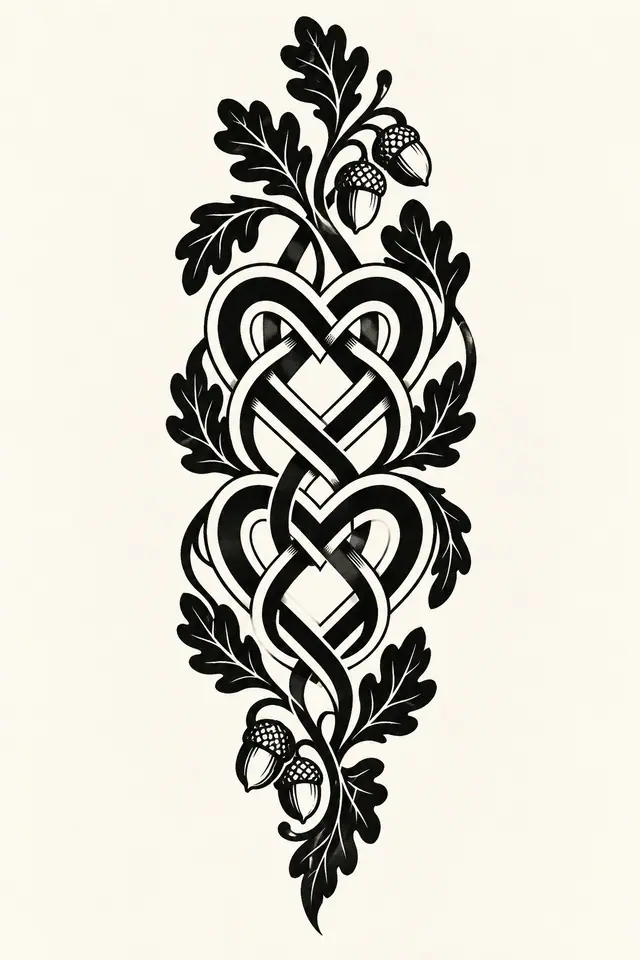 Celtic knotUnbroken interlace, read today as eternity and connection.
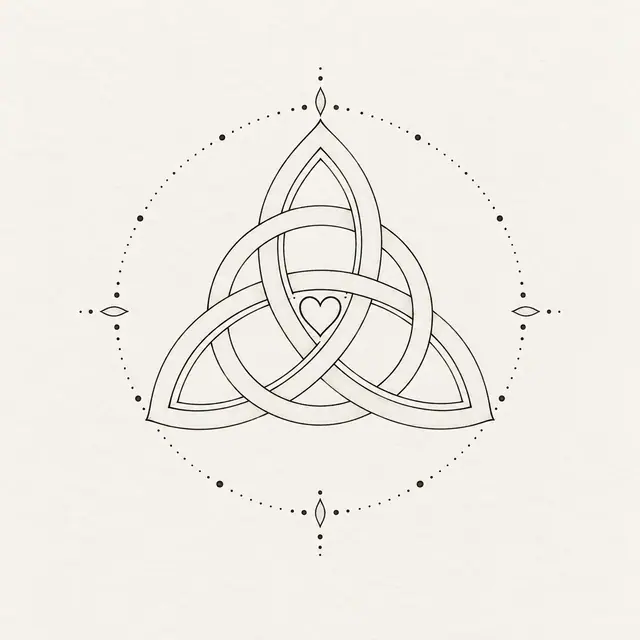 Trinity knotThree interlocked arcs, best known as the Holy Trinity.
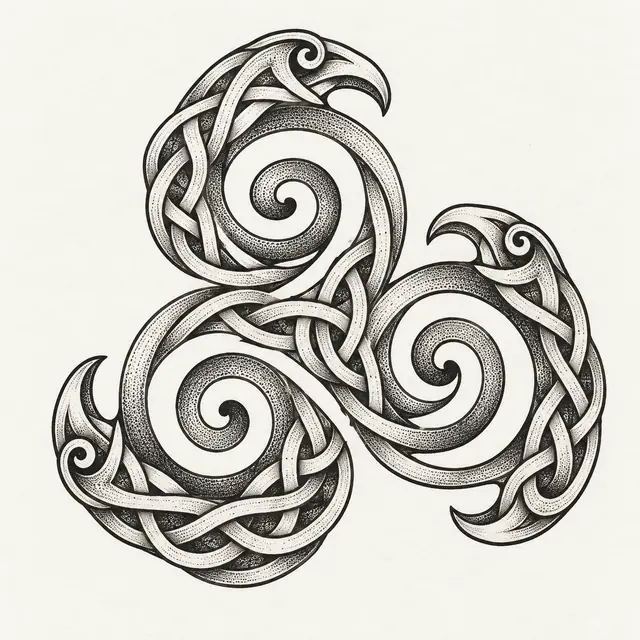 TriskeleA triple spiral that is older than the Celts themselves.
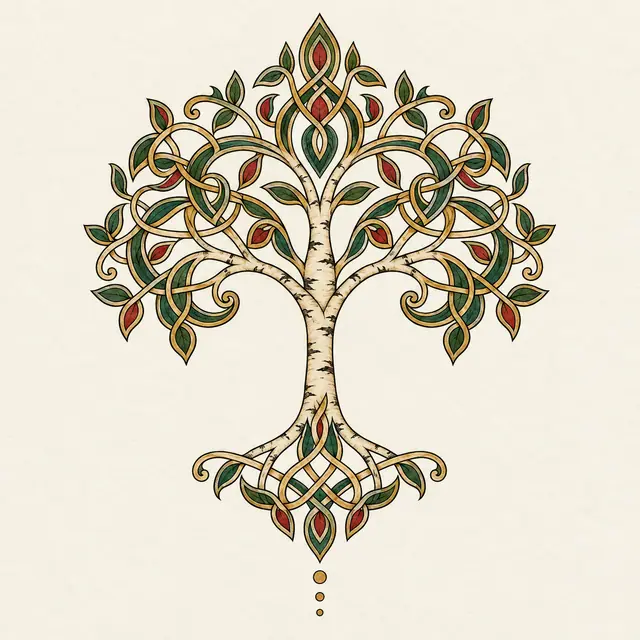 Tree of lifeRoots that mirror branches: growth, family and balance.
 CladdaghHands, heart and crown from 17th-century Galway.
 Shield knotA four-cornered knot worn for protection.
 Dara knotA modern knot inspired by the roots of the oak.
 Motherhood knotA modern knot of two hearts, for parent and child.
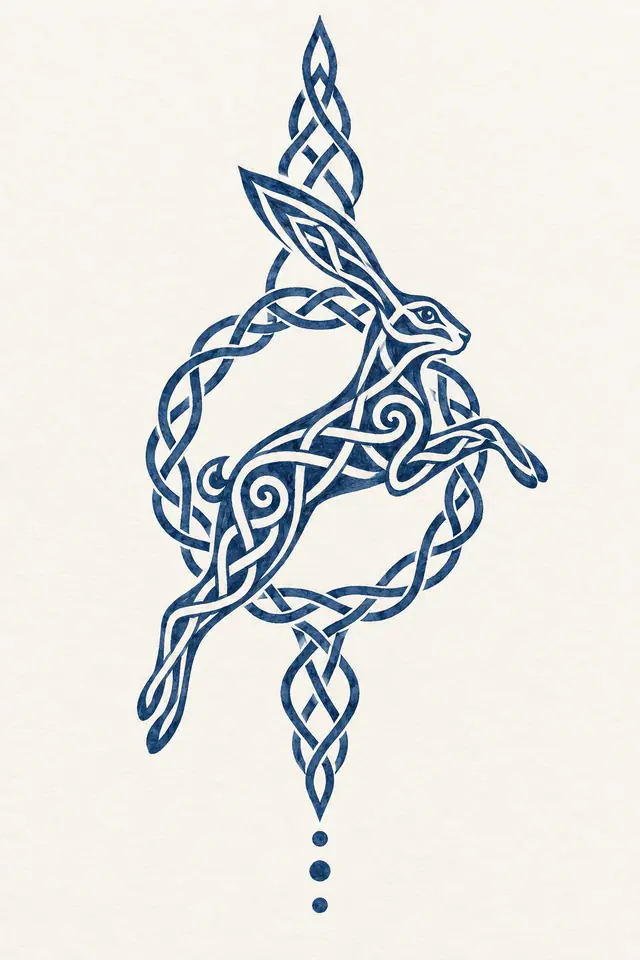 Celtic animalsWolves, stags, ravens and salmon woven into interlace.